

Welcome to my Starting Solids Series—I’m so excited to share this journey with you!
If you’re beginning your solids journey or looking into alternative approaches, I’ll be sharing everything I’ve learned from our experience: what baby-led weaning is, benefits of the method, how to practice or convince parents in Indian household, Indian-friendly food ideas, the feeding gear we found helpful, and all the little tips that made things easier along the way.
This series is especially close to my heart because baby-led weaning was the very first bold parenting decision I made. I say bold because no one I knew had tried it or felt confident about the method. When we began solids with my son, V, I wanted to share our journey—but I was still learning myself. With no support and a lot of doubt from those around me, I often found myself second-guessing the decision. But I kept going, trusting my instincts and everything I had learned.
Fast forward to today—it’s all been worth it. We now have a toddler who isn’t afraid to try new things and doesn’t complain about different textures. Even my mom, who was skeptical at first, now appreciates me for sticking with it. That shift in her perspective felt like a full-circle moment.
Through this series, I aim to pay it forward. I’ll be sharing the tools, resources, and encouragement that helped me through the messy, rewarding, and often uncertain process.
If you’re just getting started, you’re not alone—and I hope our story gives you the confidence to follow your instincts too.
Other Posts from Starting Solids Series-

What is Baby-Led Weaning?
Baby-led weaning, in short BLW, is a method of introducing solids where babies feed themselves right from the start—no spoon-feeding by adults, no purees unless baby is self-feeding them.
Instead of giving only purees, the baby gets finger-sized, age-appropriately cut foods they can hold, explore, and feed themselves. Think avocado slices, steamed carrot sticks. They learn to chew before they learn to swallow, and mealtime becomes a hands-on (and yes, often messy!) experience.
The key idea: You offer the food; the baby decides how much to eat.
Benefits of Baby-Led Weaning
- One of the biggest benefits of self-feeding, according to experts, is that it encourages better self-control and strengthens the child’s natural ability to recognize when they’re hungry and when they’ve had enough.
- (my personal favorite) Babies learn to chew their food properly- chewing food properly might seem small, but it’s something I struggled with as a kid. With baby-led weaning, I’ve noticed that my babies instinctively chew even before they have teeth, instead of swallowing—it’s been a game-changer for me.
- Encourages independence and fine motor skills – as babies learn to grasp, scoop, and bring food to their mouth on their own, they naturally develop better hand-eye coordination and fine motor control.
- wholesome, balanced diet – Baby-led weaning naturally encourages a healthier diet with more vegetables, fruits, and whole foods, rather than relying on packaged or cereals.
- Early exposure to diverse flavors, allergens, and textures – Since babies aren’t limited to purees, they get to explore a wider variety of tastes and textures from the start, which may help reduce picky eating later. Allergens are also introduced early in BLW, which could lower the risk of developing allergies.
- More enjoyable mealtimes – Babies get to eat at their own pace, explore food freely, and engage with colors, textures, and tastes—making mealtime a fun, low-pressure experience for the whole family.

My Golden Rules of Baby-led Weaning
- Keep your expectations low – Don’t expect your baby to finish the whole bowl—or even eat much at all in the beginning. Remember, in the first year, breast milk or formula is still the baby’s primary source of nutrition. Solids are complementary foods. This stage is all about exploration—getting used to new textures, flavors, and the act of eating itself. Give your baby the time and space to learn the new skill at their own pace, without pressure. Every bite, squish, or even mess is a step forward in their learning journey.
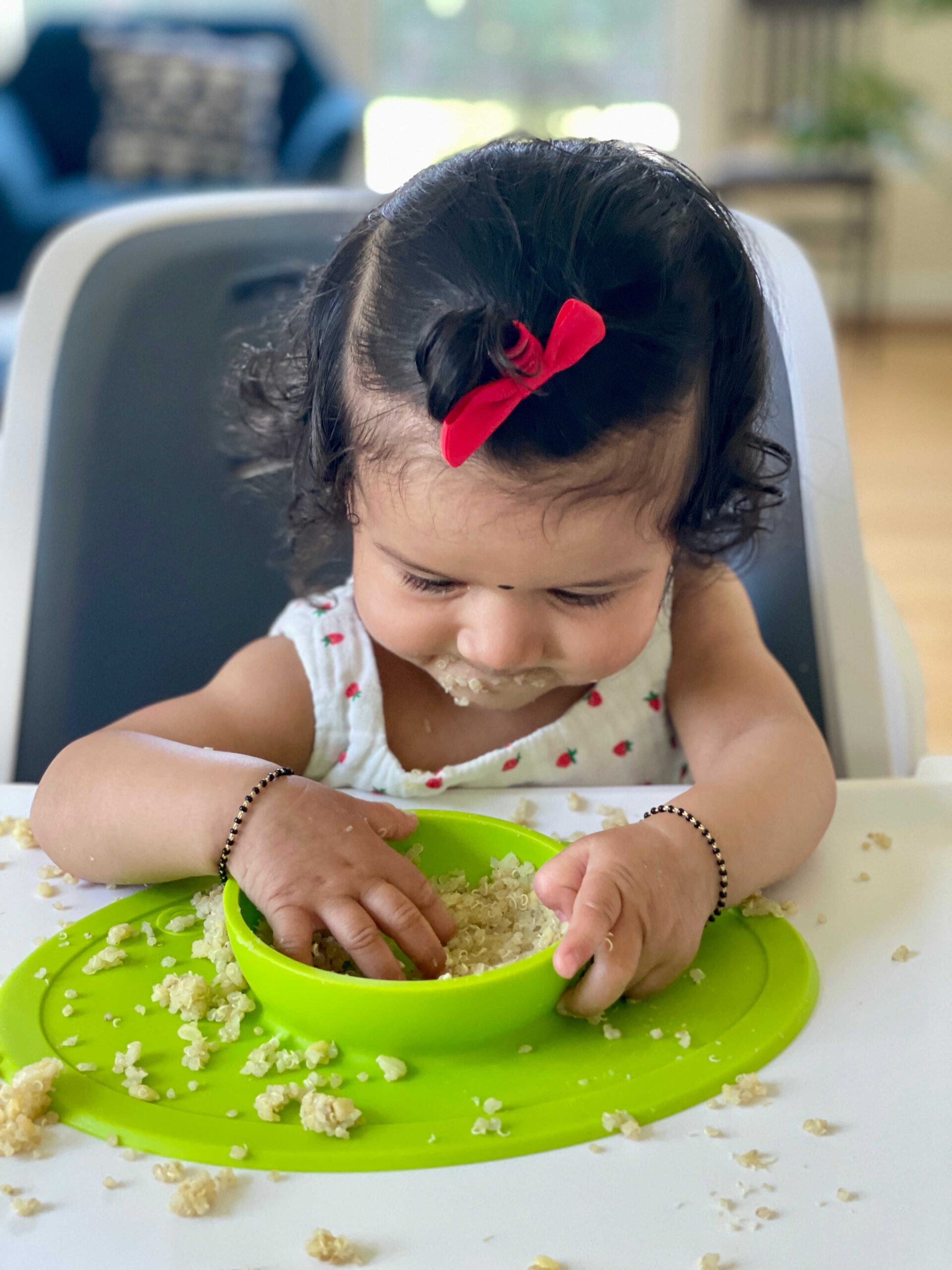
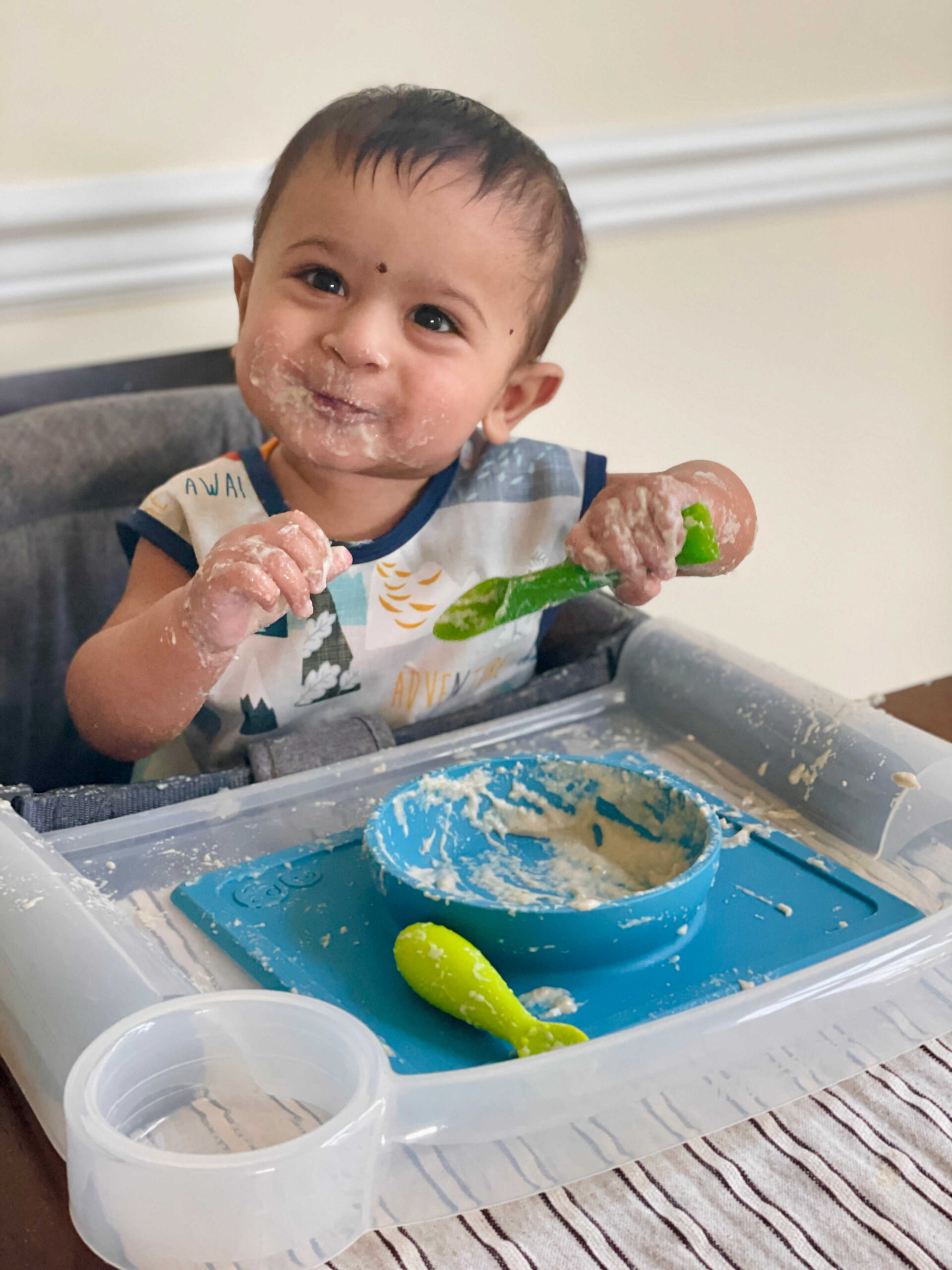
- Mess is good – one of my best friends told me she couldn’t continue baby-led weaning because she just couldn’t handle the mess or watch her baby “just play” with food. However, the truth is that, just as we teach many things through play, learning to eat is no different. I always remind myself—this is a milestone, not a mess to clean up right away. Let them explore. Let them get messy. That’s how they learn.
- Ignore the “Oh, he/she didn’t eat anything” comments – This has been (and still is) one of the hardest parts of baby-led weaning for me. Hearing those comments from parents, in-laws, or others would instantly make me doubt myself. I’d start thinking, “Maybe if I just fed him, he would’ve eaten more…”—and that would completely throw me off track. It took time to trust the process and remind myself that this phase is about learning, not measuring how much they eat at each meal.
- Patience Is Everything– Some days they’ll eat, other days they might just play—and that’s completely normal. Progress isn’t linear with baby-led weaning. Focus on building a positive association with food rather than counting bites.
- Consistency Over Perfection – Make a meal plan each week—and thank me later!– Having a meal plan for the week (or even just for the next couple of days) made a huge difference in our BLW journey. It helped me offer variety without the daily guesswork or stress. Without a plan, I’d often find myself skipping meals or defaulting to the same food every day. That said, there’s absolutely nothing wrong with repeating foods—especially on busy days. Repetition can help babies become more familiar and comfortable with certain tastes and textures. BLW can feel overwhelming at times, especially for working or exhausted moms (which is most of us!). So give yourself grace. Some days will be easier than others. What truly matters is showing up consistently and creating a calm, positive experience around food.
- Learn the difference between Gagging and Choking– I took the Starting Solids course offered by Solid Starts, and it gave me the confidence to keep going even when things felt challenging. The course explains in detail the difference between gagging and choking, and what to do if your baby ever chokes. They also have a lot of helpful information on their website. Check out this post to learn more about gagging vs. choking, and take a look at their infant safety guide for peace of mind.
How to Start Baby-Led Weaning: Step-by-Step
Step- 1. Recognizing Readiness
Baby-led weaning is generally considered safe from 6 months of age, and the baby shows all the key signs of readiness listed below-
- Good head and neck control — Baby can hold their head steady and turn it easily, which is essential for safe eating.
- Sits up with minimal support — Baby can sit upright with little or no support, which helps with safe swallowing and digestion.
- Reach & grab — Baby can pick up objects and bring them to the mouth
- Shows interest in food — Baby reaches for your food, watches you eat, or tries to grab food from your plate.
Step-2. Create a Safe Mealtime Environment
- Always supervise when the baby is eating.
- Sit the baby upright in the high chair.
- Minimize distractions such as TV or loud music to help your baby focus on eating.
- Learn the difference between gagging and choking (and what to do if it happens)
Step-3. Choose the Mealtime
Pick a time when the baby is alert, rested, and in a good mood, ideally 30-40 minutes after breast or bottle feeding, so they are not too hungry.
Step 4- Start with Single-Ingredient Food- Veggies, Fruits, and Grains
Unlike the old days, when rice cereal was the go-to first food, today, there are no hard-and-fast rules about what foods to begin with. From my experience, I would recommend starting with simple, single-ingredient foods such as fruits (steamed apple, avocado spears, strawberries, vegetables (steamed broccoli, roasted zucchini), mashed sweet potato, and iron-rich grains such as oatmeal, amaranth porridge, or quinoa.
Cut foods into pieces about the size and shape of your pinky finger, as 6-month-old babies typically use their whole palm to grasp. Once your baby develops the pincer grasp (usually around 8–9 months), you can start offering smaller, bite-sized pieces.
Favorite Resource on How to Offer Food for BLW Beginners
I refer to the Solid Starts website and app for guidance. It’s an incredible resource developed by pediatricians, feeding therapists, allergists, and dietitians. The app features a database of over 400 foods, each with detailed nutrition information, choking and allergen guidance, age-appropriate serving suggestions, and cutting instructions. Whenever I’m planning to introduce a new food, I simply search for it in the app to see safe and practical ways to serve it.
Also, try to include key nutrients in their first foods—especially iron, zinc, and omega-3 fatty acids. This is particularly important if you’re breastfeeding or exclusively pumping, as formula is typically fortified with these nutrients, but breast milk has lower amounts.
Step 5- Offering The Food
Once you’ve checked all the readiness signs and created a safe setup, it’s time for the fun part—offering food!
Here’s how to get started:
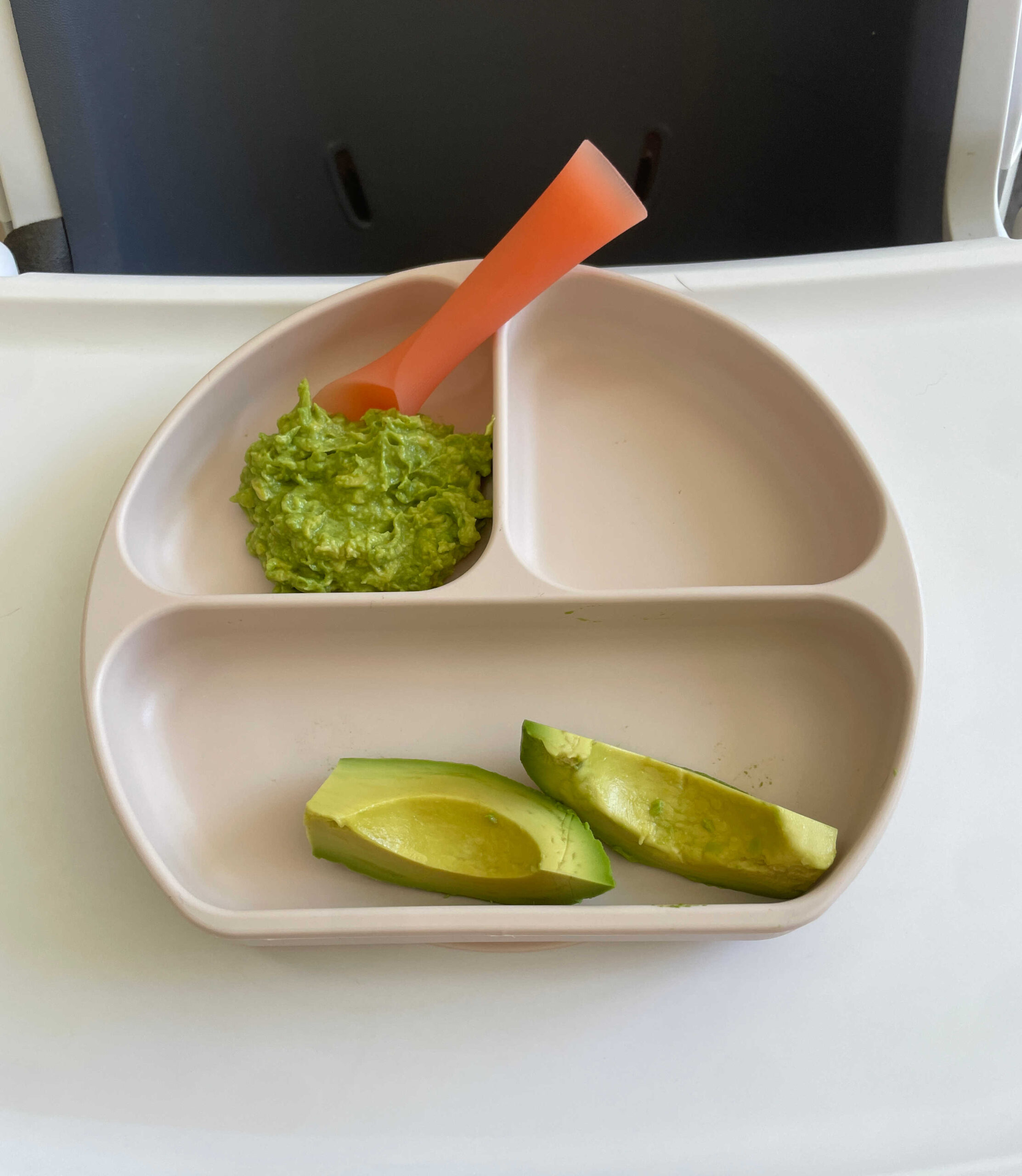
- Place the food directly on the high chair tray or plate in front of your baby. Offer just 1–2 pieces of food at first so it doesn’t feel overwhelming. In the beginning, I provide both a finger food and a mashed version of the same food. If the baby is not able to hold and eat independently, I pre-load a spoon with the mashed version and hand it to them so they can self-feed.
- Model the behavior – Let your baby watch you take a bite of the same (or similar) food. Babies learn by watching, and seeing you eat encourages them to try. Make exaggerated gestures—like putting the food in your mouth, chewing with enthusiasm, and showing how much you’re enjoying it. In the beginning, I’d often make an extra piece of whatever I was serving just for myself, so I could model how to eat it.
- Let baby take the lead – Allow them to reach, grab, and explore the food at their own pace. If they’re struggling to pick it up, you can help by placing it in their hand. It’s okay if all they do is squish or taste it a little at first—that’s still progress.
Frequently Asked Questions (FAQs)
These are some of the questions I get asked most often by new and fellow moms—whether on Instagram or in person.
At what Age did you start Solids?
For both my kids, we introduced solids at 6 months once they showed all the signs of readiness. Although the pediatrician recommended starting purees at their 4-month checkups, I chose to wait.
Did you Introduce Purees before you did BLW?
No, we didn’t exclusively do purees. We started Baby-Led Weaning (BLW) at 6 months with finger foods and mashed foods. For items like beans or lentils, which aren’t safe to offer as is at 6 months, I cook and blend them into a thicker consistency. Then I let the baby scoop it with their hands and also preload a spoon and offer it to them so they can self-feed. My son never even had any of those puree pouches.
Can you share meal plate ideas for Baby-led Weaning?
Yes, I am planning to make weekly meal plates with a lot of recipes as a part of this series. I will also share a guide to introduce allergens and how to introduce indian vegetables and grains.
Do you only need to offer steamed foods in BLW? What are some good alternatives?
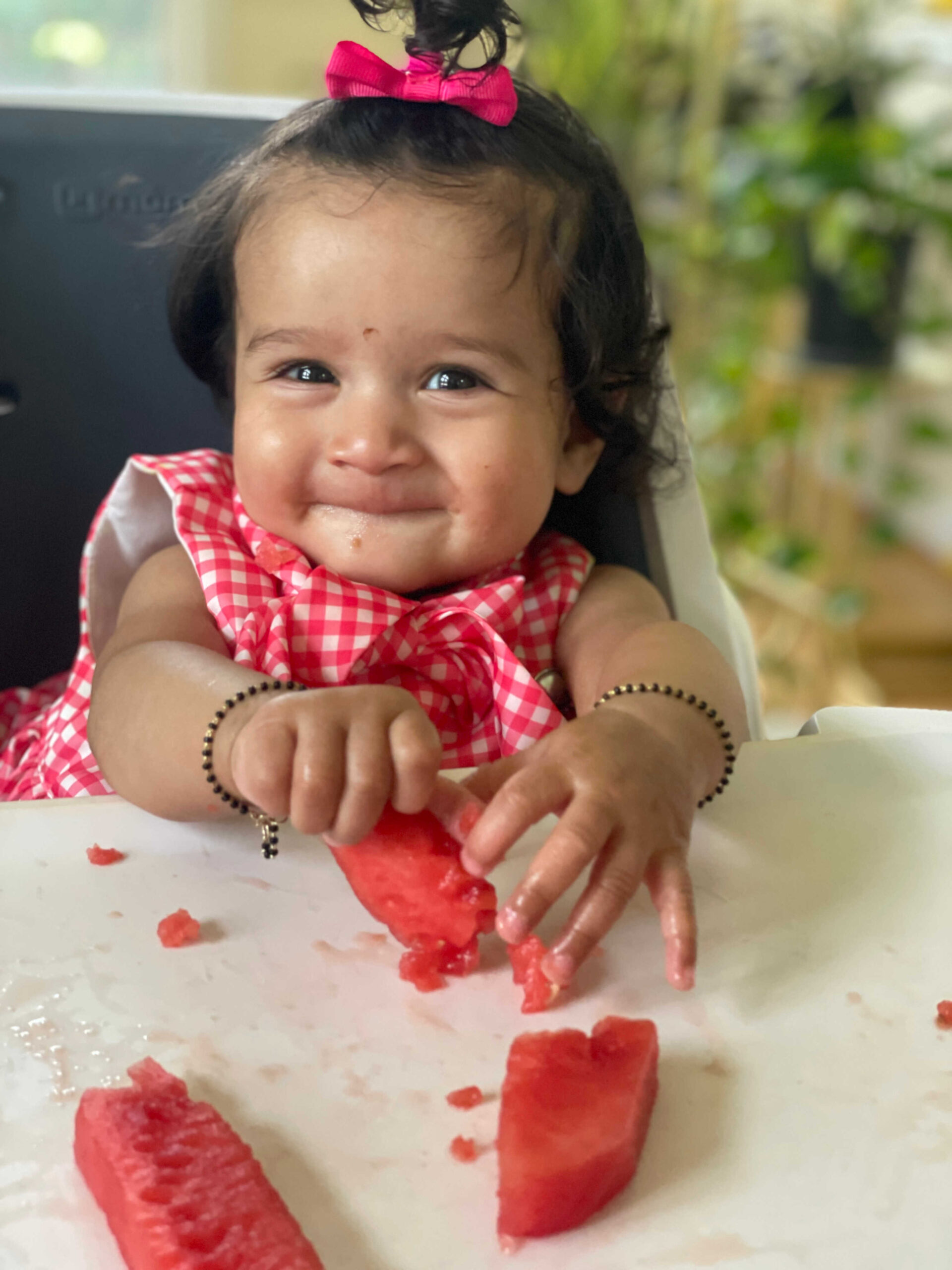
Not at all. While steaming is a common method because it softens foods without losing too many nutrients, baby-led weaning isn’t limited to steamed foods. You can also serve:
- I prefer sautéing certain vegetables, like squash or asparagus, with avocado or olive oil, because steaming can make them overly soft and difficult for babies to grasp during self-feeding.
- Roasted or baked vegetables and fruits (adds flavor and different textures)
- Boiled options like eggs, potatoes, or pasta
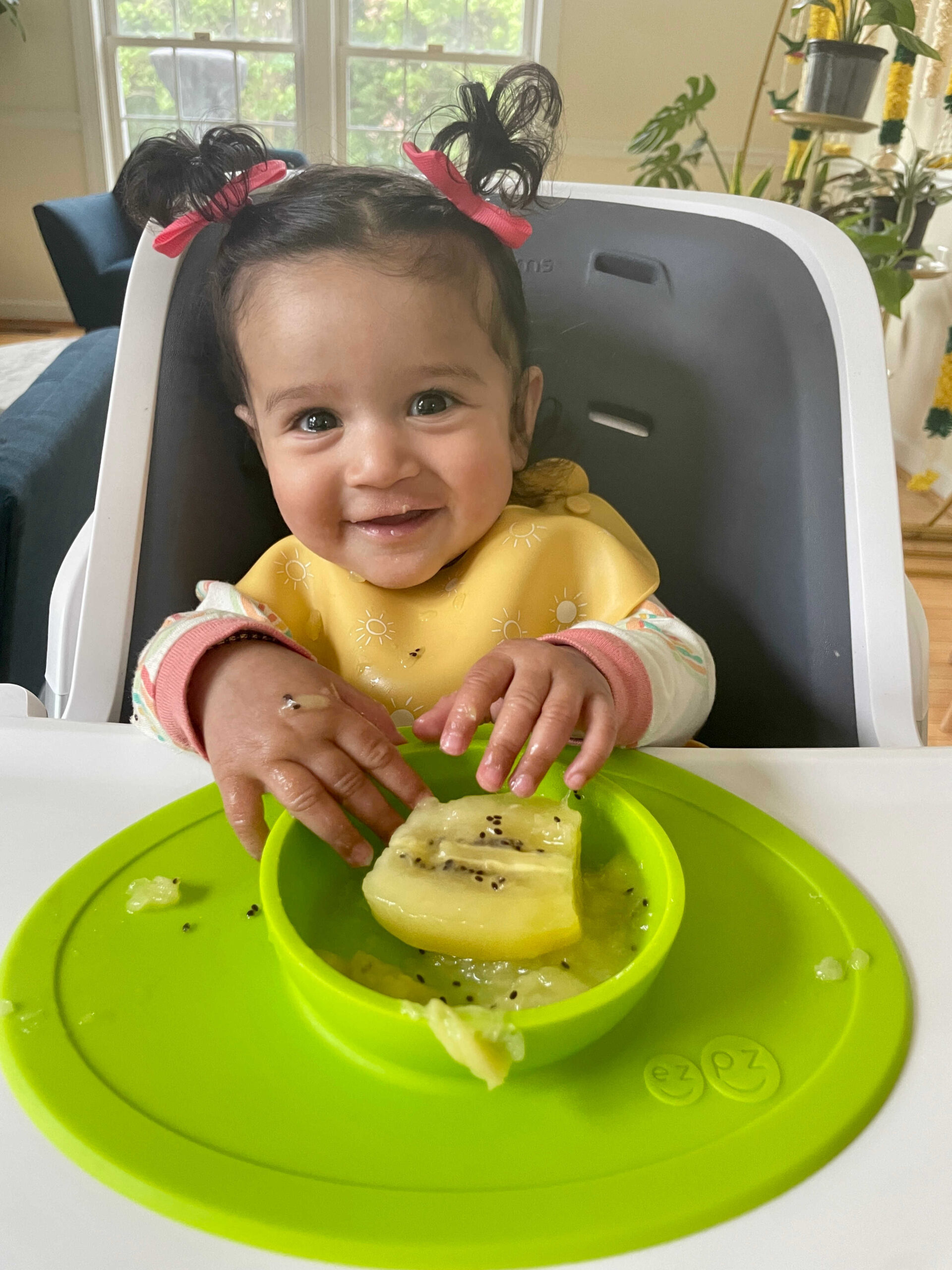
- Raw foods like cucumber sticks, avocado, or some ripe fruits like Kiwi, plum, banana, etc.
What motivated you to keep going when no one supported you?
The thing that helped me the most was educating myself. I came across the Starting Solids course from Solid Starts, and it was exactly what I needed. Seeing videos of babies feeding themselves, learning about gagging, and knowing what to do if a baby chokes gave me the confidence I needed. I showed those videos to my mom and Rajesh so they know that babies can feed themselves, it’s not something crazy I am trying.
The first month of BLW with V was tough—he wasn’t eating much, honestly, barely anything—and Rajesh was worried about the small portions, and insisted on moving to feeding purees. I asked for just two months to give this method a try, and by the end of that time, we were both amazed at how much progress he had made. Watching him chew, explore, and enjoy food on his own was such a rewarding experience.
How did you handle parents/in-laws commenting about BLW?
When I started BLW with V, my mom was with us. It was new for everyone. She would get anxious whenever he gagged, thinking he might choke, and she would feed him if he were playing with food for too long. I began showing her videos of babies feeding themselves and explained the difference between gagging and choking, which helped her feel a bit more comfortable.
Now with my daughter, my mother-in-law is here. She has seen V feed himself, so it was not a new concept for her. She also quickly noticed that my daughter gets distracted when there are more people around. When I mentioned this, she started keeping her distance during mealtimes, which made a big difference.
My daughter is eager to try whatever we’re eating—she’ll even reach over and grab from our plates. If it’s something baby-friendly, like fruit or plain rice, my MIL or I will feed her a little from our plate to avoid mess at times. I don’t limit her curiosity in those moments. But during mealtimes, I’m more intentional about encouraging self-feeding and giving her the space to explore on her own.
You don’t necessarily need your parents or in-laws to agree with BLW completely—but you can ask them to support you by simply staying away during mealtime. Fewer distractions mean a calmer, more focused eating environment for the baby. You can take videos of the baby feeding and show them to the parents later.
How do you handle the mess and food waste?
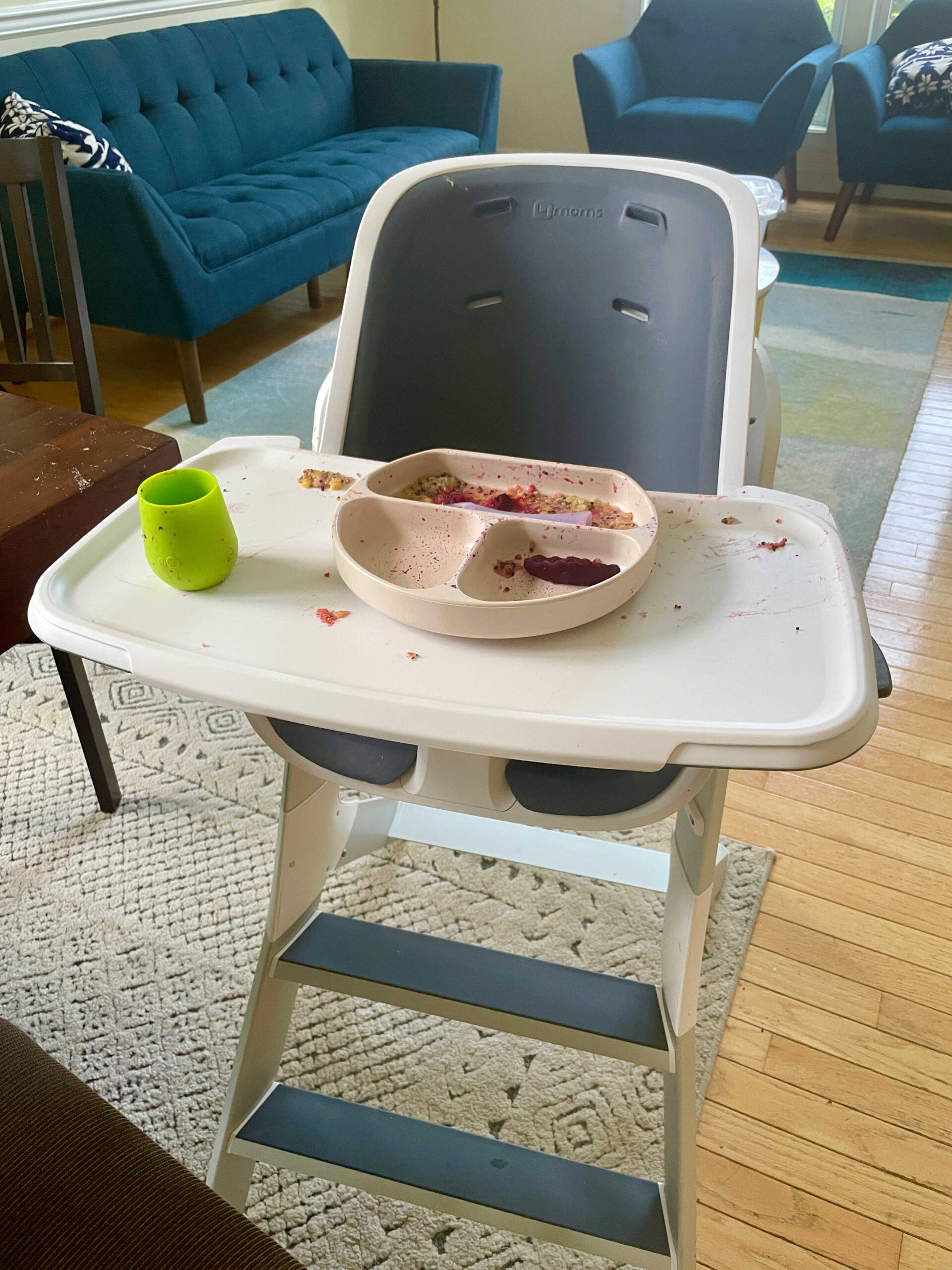
Bibs and a splash mat are your best friends. They make cleanup so much easier and help you stress less about the mess. Food waste is part of the learning process, but offering small portions at a time and saving leftovers can help reduce it.
Cleaning Tips
When it comes to cleaning, I don’t rush to tidy up right after meals—especially during work hours. Skipping that immediate cleanup has been such a game-changer. It makes the whole process feel so much less overwhelming. On days when the baby doesn’t eat much, it also helps me not feel discouraged right away. I get a chance to step back, disconnect, and return to it later when I’m in a better frame of mind. Usually, I take care of it while loading the dishwasher after work or before her evening snack.
Little changes like this—letting go of perfection, spreading tasks out can make such a big difference. They ease the pressure and leave more room to enjoy the moments that truly matter.
I rely on sanitizing wipes for quickly cleaning the high chair and use a gentle dish soap for washing plates and spoons. For the splat mat, I usually fold it and keep it aside. Unless it’s very messy, I’ll toss it in the dishwasher right away; otherwise, I wash it once it’s too messy. I don’t typically pick food up from the mat to put back on the baby’s plate, so this routine works well for us. Plus, with our dog around, we don’t get that chance anyway!
Are you doing anything differently with Baby #2
Yes, I am doing a few things differently this time around-
- I’m introducing more Indian vegetables and recipes earlier this time. With V, I didn’t do a good job in offering Indian veggies like bottle gourd, bitter gourd, and others as finger foods. If I had introduced them earlier, he might have developed a stronger liking for them.
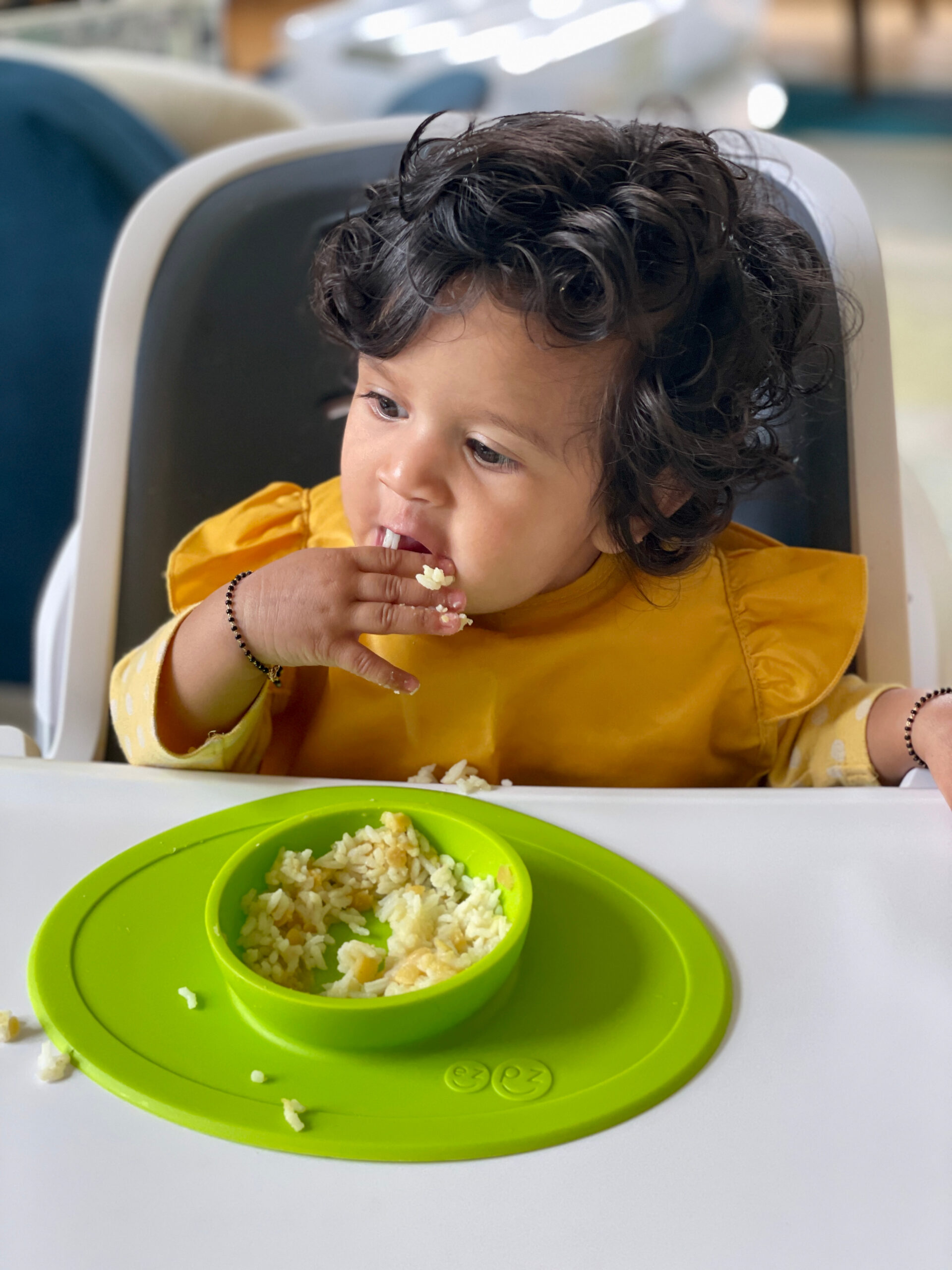
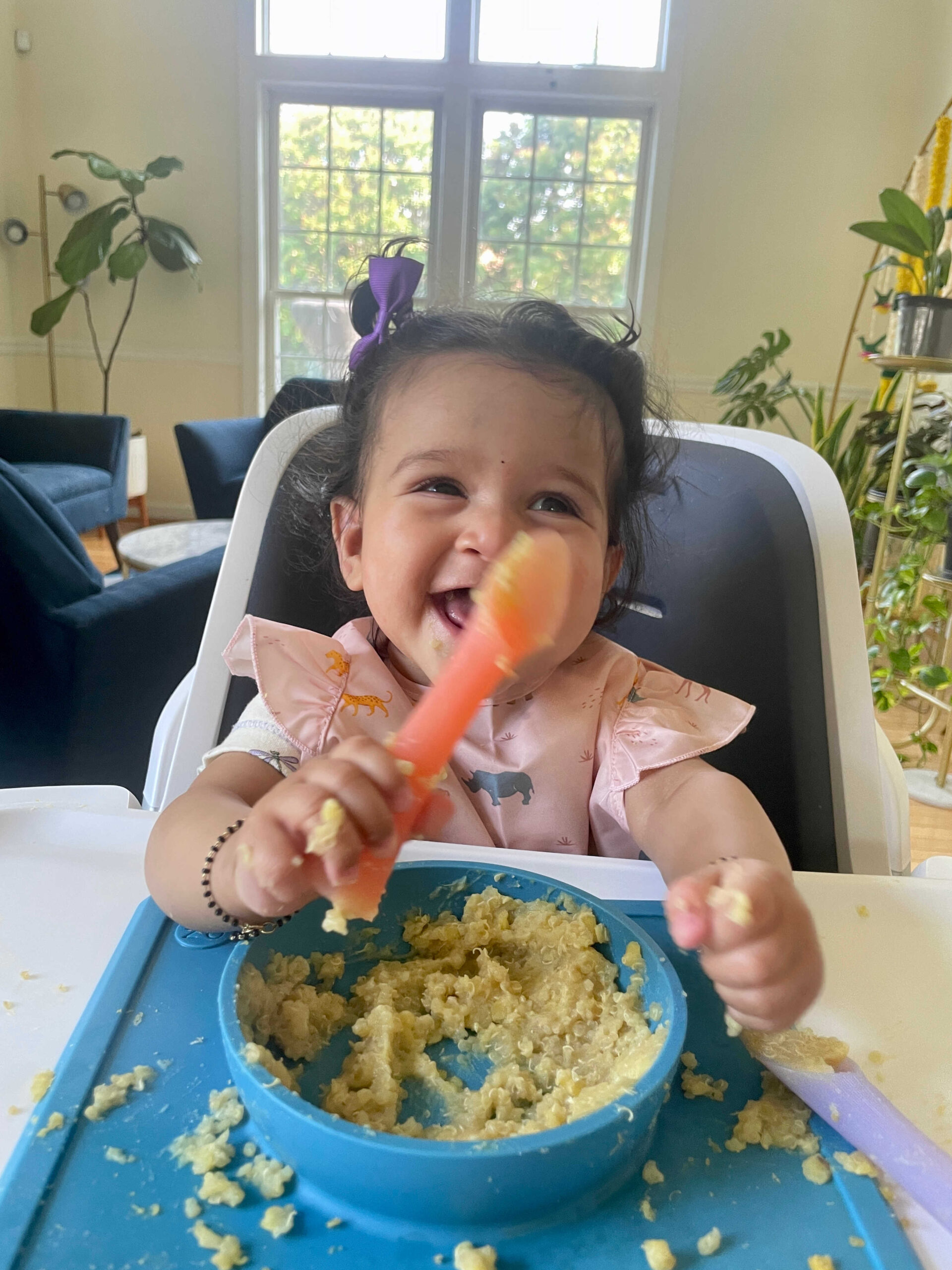
- I’m also not holding back on rice recipes this time. With V, I avoided giving much rice before age one because of concerns about arsenic levels, and when I did, it was mostly in the form of cereal rather than rice balls. One of the challenges we now face with him is getting him to enjoy rice with curries. Since rice is a staple in our household—and because we cook it on the stovetop and drain the water, which helps reduce arsenic levels—I want to make sure my daughter is introduced to it early on. After all, the whole concept of baby-led weaning is to promote family meals. If a child can happily eat what the family eats, that’s the ultimate goal. I encourage offering more of the foods you eat as a family early on so your baby becomes familiar with them naturally. That said, I’m also incorporating a variety of grains like quinoa, amaranth seeds, and others to keep her diet diverse and nutritious.
- Overall, I feel more aware and confident this time around. I’m also making a conscious effort to offer more variety and nutritious options.
Check Out the Post #2 in the “Starting Solids” Series here (coming soon)…


0 Comments